Understanding Four-Handed Dentistry
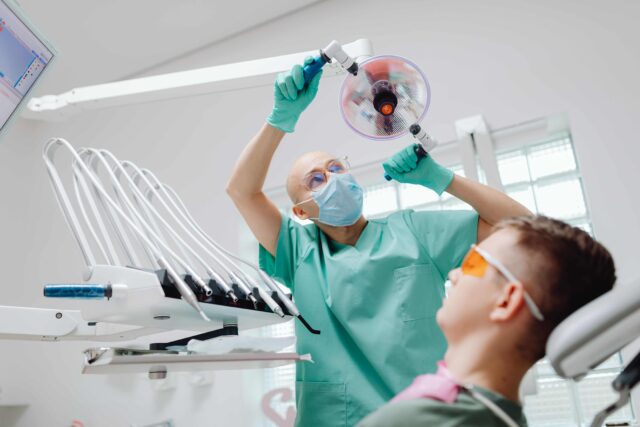
Four-handed dentistry involves a trained dental nurse working closely with the Dentist throughout a dental procedure. The nurse anticipates the required instruments, positions them correctly, and is ready to assist throughout the procedure.
Benefits of Four-Handed Dentistry
| Benefit | Why it matters |
| 1. Increased Efficiency | Studies suggest that four-handed dentistry can enhance productivity by 33% to 75%, minimizing unnecessary motion and saving valuable time. |
| 2. Better Back Care | With the majority of dental professionals experiencing musculoskeletal disorders, four-handed dentistry reduces the need for awkward movements, promoting back health. |
| 3. Improved Time Management | Efficient instrument handling and reduced loading times result in shorter treatment durations, enhancing overall time management. |
| 4. Job Satisfaction | Pain-free work, on-time schedules, and patient comfort contribute to a more enjoyable work environment for dental professionals. |
Principles of Four-Handed Dentistry
Understanding the principles is crucial for successful implementation:
| Principle | What it means |
| 1. Ergonomic Equipment | Instruments must be designed to encourage motion reduction. |
| 2. Comfortable Seating | Both operator and dental nurse should be comfortably seated. |
| 3. Motion Economy | Practice smooth and continuous motions, reducing unnecessary movements. |
| 4. Pre-set Trays | Instruments should be organized in trays for easy access. |
| 5. Advanced Treatment Planning | Treatment plans should be organized logically and in advance. |
Achieving Motion Economy
Exploring the concept of motion economy and its five classes, providing practical tips for achieving it in a dental setting.
Dental Unit Designs
Discussing common dental unit designs and highlighting the advantages of the transthorax unit for promoting ergonomic four-handed dentistry.
Organization of a Four-Handed Dental Environment
Exploring the zones of activity, essential for effective four-handed dentistry organization and smooth workflow.
Communication Strategies
Examining the communication methods between operators and dental nurses during four-handed dentistry, including non-verbal signals.
Strategies for Achieving Four-Handed Dentistry
Detailing teamwork strategies and specific roles for both operators and dental nurses to enhance efficiency.
Caution and Considerations
Addressing potential pitfalls and precautions when implementing four-handed dentistry, including proper instrument transfer techniques.
Four-handed dentistry represents a transformative approach to dental procedures, offering numerous benefits for both dental professionals and patients. By embracing this efficient technique, dental practices can significantly enhance productivity, reduce strain, and improve overall job satisfaction.